What Roman blinds are — and what they do well
A Roman blind is a flat fabric panel that rises in horizontal pleats when a cord or chain mechanism is operated, and drops flat across the window when lowered. Fully lowered, it provides even coverage across the opening; fully raised, it stacks neatly above the glass in soft folds, clearing the pane entirely. Between these two positions the only usable intermediate state is the blind lowered to a chosen height, exposing the glass below the hem and covering it above.
Roman blinds do several things well. They introduce colour, pattern, and fabric texture into a room in a way that no hard window treatment can replicate. Linen, velvet, wool tweed, printed cotton — the range of available fabrics is enormous, and for rooms where the window treatment is a deliberate design centrepiece rather than a functional background element, that flexibility is genuinely difficult to match. A lined Roman blind in a bold print can anchor a room the way a piece of artwork does: it introduces personality, pattern scale, and warmth in a single decision.
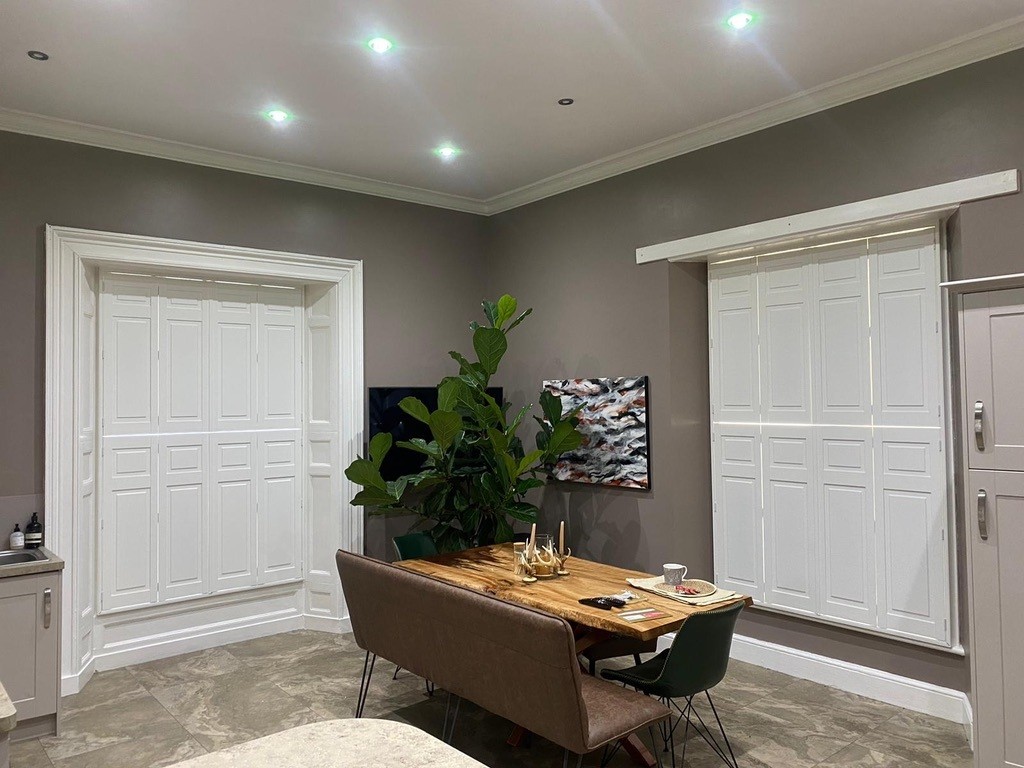
Roman blinds also work well as secondary treatments layered behind shutters — a combination that is more common than many homeowners expect. A full-height shutter panel installed across the reveal controls light and privacy precisely throughout the year; a Roman blind mounted above on a pole or fascia adds softness and colour when the shutters are open and does not interfere with shutter operation when both are in use.
What plantation shutters offer that Roman blinds cannot
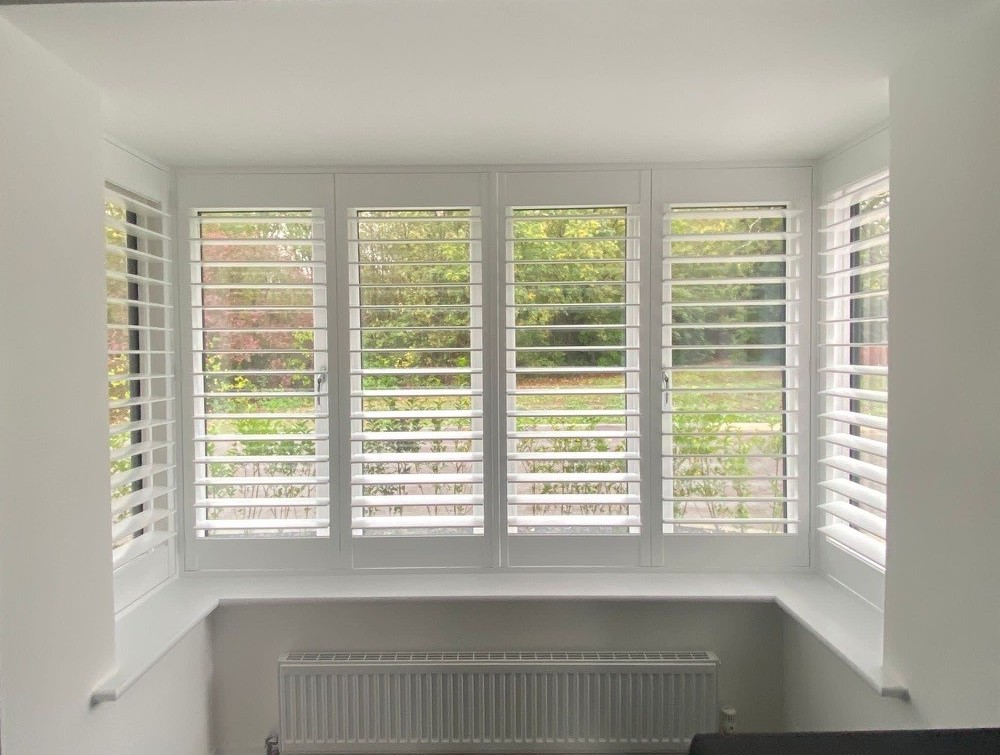
The structural difference between the two treatments drives most of the practical differences. A plantation shutter is a rigid frame fitted inside the window reveal; its louvres are mechanical slats that can be tilted to any angle independently of whether the panel is open or closed. A Roman blind is a fabric panel that is raised or lowered as a single unit — there is no intermediate light-control mechanism built into the fabric itself.
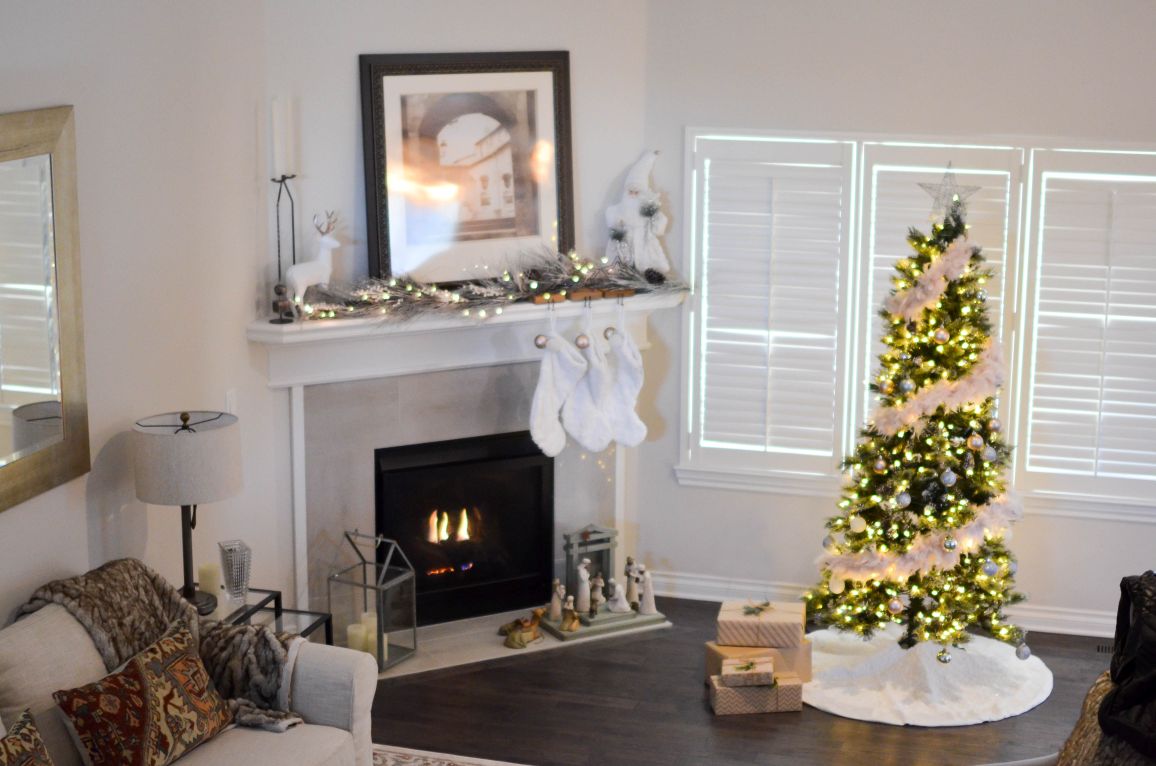
This means plantation shutters can do something Roman blinds structurally cannot: admit indirect daylight while blocking a direct sightline from outside. Tilting the louvres upward directs incoming light toward the ceiling; tilting them downward directs it toward the floor; setting them at roughly 45° lets diffused sky light enter the room while the view through the glass from pavement level is interrupted at eye height. A Roman blind lowered to the same privacy position blocks the direct view and diffused daylight together — the room dims whenever the blind comes down.
Plantation shutters also hold a significant advantage in moisture-prone environments. Composite shutters in the Mimeo waterproof composite range are fully moisture-resistant, non-absorbent, and unaffected by the steam, condensation, and humidity that would cause a fabric Roman blind to develop mildew, warp on its lath pockets, or fade within a year or two of kitchen or bathroom use.
Long-term durability is another key distinction. A plantation shutter fitted today will still be in place, unchanged, 20 years from now. A Roman blind requires replacement every five to eight years on average — sooner in kitchens and south-facing rooms with direct sun exposure, and whenever you redecorate and the existing fabric no longer suits the scheme. For a broader look at how shutters compare with other fabric treatments on cost and lifespan, see how shutters measure up against roller blinds and our room-by-room guide to shutters versus curtains.
Where Roman blinds hold the advantage
Roman blinds are not simply an inferior version of shutters. There are specific contexts where they are the clearly better choice.
Budget-constrained projects. A quality Roman blind professionally fitted costs £80–£250 per window depending on fabric and size. A plantation shutter on the same window costs £350–£600+ all-in for composite, more for hardwood. If budget is the primary constraint and the window is not subject to moisture or demanding light-control requirements, a Roman blind is the sensible short-term solution — with the understanding that it will need replacing in five to eight years. For situations where renting or a short tenure makes permanent installation impractical, our guide on when blinds are the pragmatic choice covers the decision in more depth.
Rooms where fabric warmth and pattern are central to the design. Formal dining rooms, studies, and rooms in period homes where the window treatment is part of a fabric-led interior scheme — matched to curtains, wallpaper, or upholstery — are natural territory for Roman blinds. A plain painted shutter sits very differently in these rooms from a large-scale linen print or a textured velvet blind.
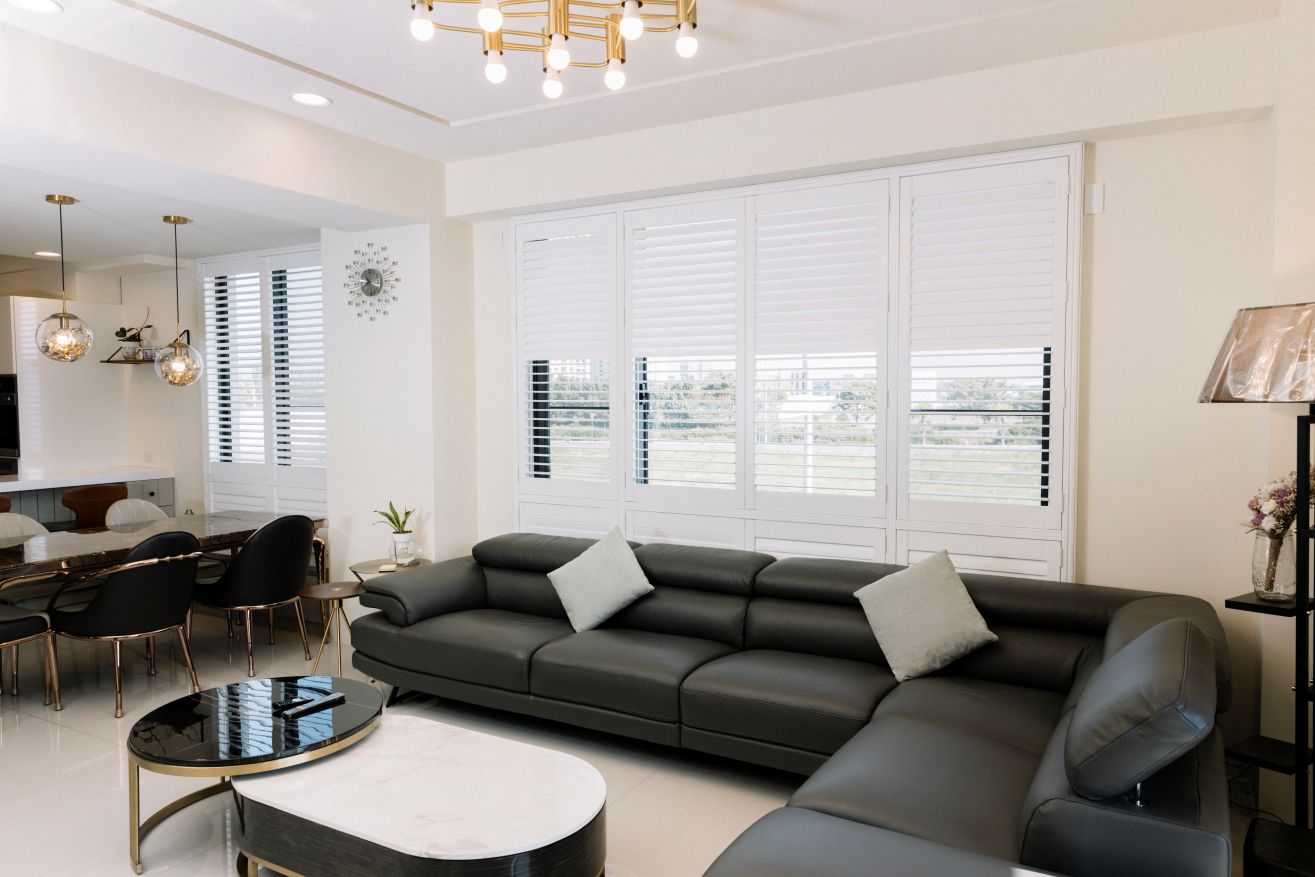
Very wide, low windows where louvres would feel busy. On a horizontal picture window in a contemporary open-plan room, the regular rhythm of horizontal louvres across a wide span can feel visually repetitive. A Roman blind in a flat, unlined natural linen reads more quietly in this setting. Tracked shutter configurations using tier-on-tier panels with split-louvre tilt can reduce the visual density effect on wide windows, but the fundamental aesthetic difference remains.
Room-by-room guide: shutters vs Roman blinds
The right treatment is often determined by the room and its specific demands rather than a single universal preference.
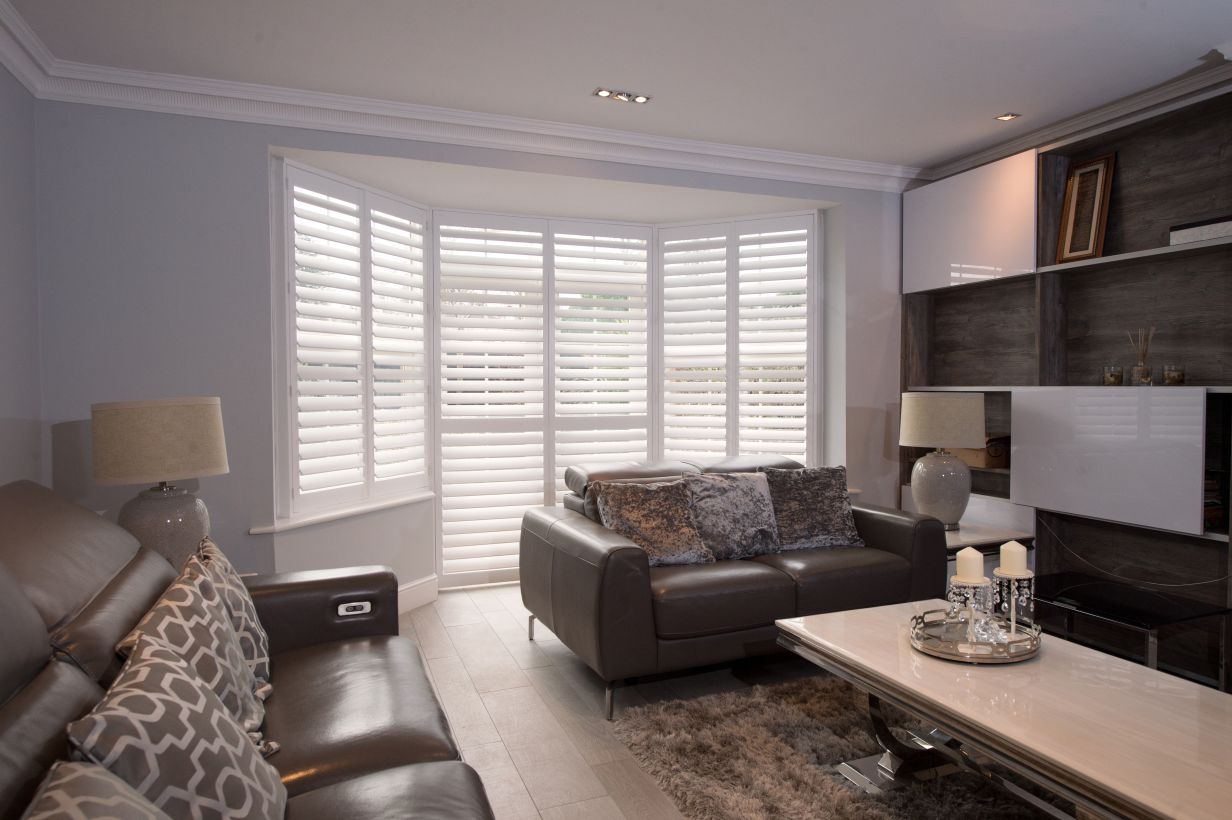
Living room. Shutters win in most cases. Ground-floor front rooms facing a street need privacy control that a Roman blind cannot provide without darkening the room; louvres angled upward deliver daylight without the pavement sightline. Roman blinds suit a formal drawing room where fabric pattern and warmth are explicitly part of the interior scheme and light management is secondary.
Kitchen. Shutters win clearly. Steam, cooking grease, and moisture make fabric blinds a maintenance liability in UK kitchens. Composite shutters wipe down in seconds, will not warp, and remain unaffected by humidity year after year. Even where the design intent calls for a natural, textured look, composite shutters are available in a wide enough colour range — including natural tones and off-whites — to suit the scheme without the upkeep burden.
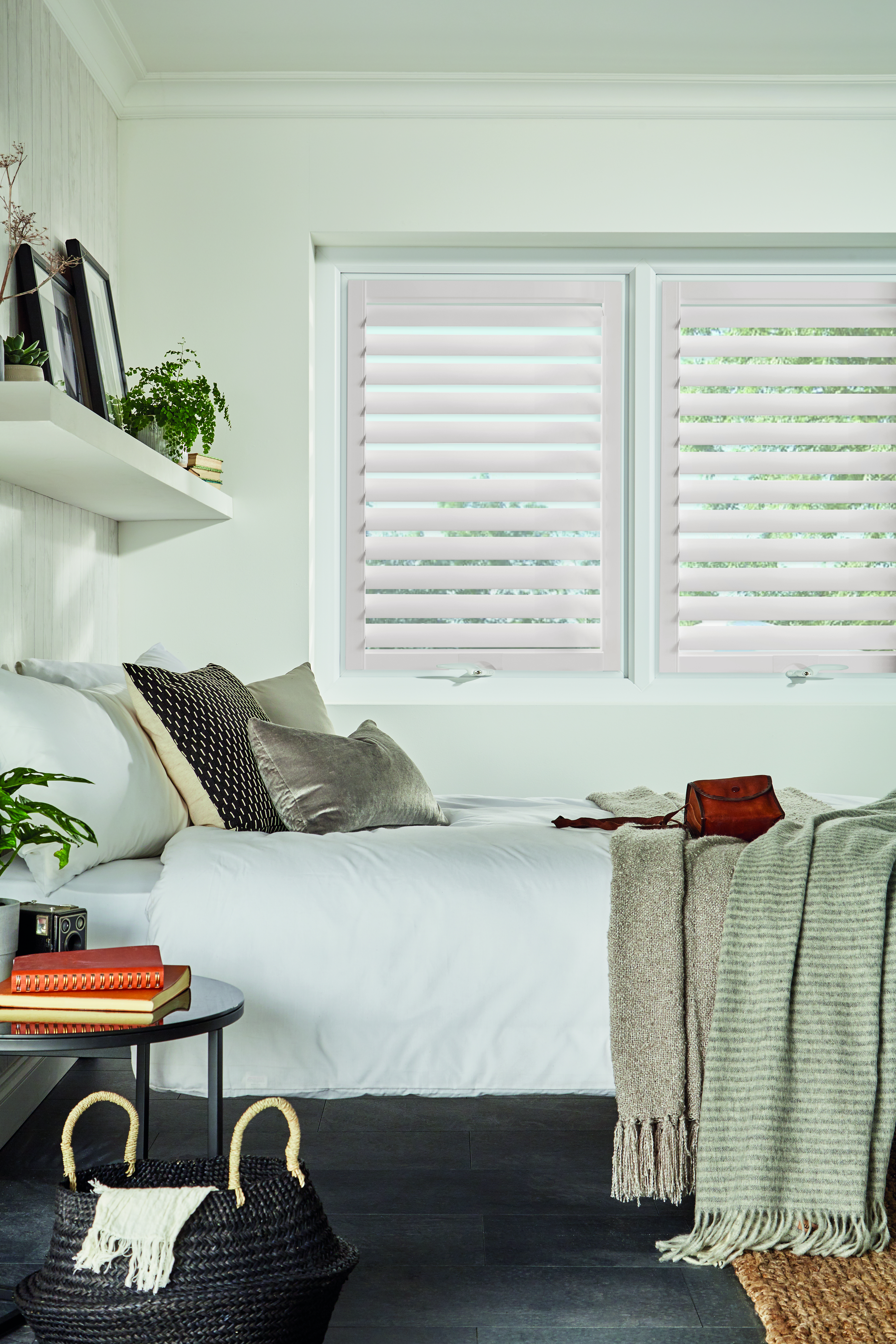
Bedroom. Shutters win on practical grounds; Roman blinds can win on aesthetic ones. A full-height plantation shutter with a tight louvre overlap achieves near-blackout performance and lasts the life of the room. For bedrooms where light management throughout the day matters — early risers, home offices, children's rooms — shutters' louvre flexibility adds significant value. Café-style shutters on street-facing bedroom sash windows offer daytime privacy without the room-darkening effect of a lowered blind.
Bathroom. Shutters win decisively. Fabric Roman blinds and bathrooms are a poor combination in the UK climate — moisture, steam, and condensation degrade fabric, warp lath pockets, and create conditions for mildew within a year or two in an enclosed wet room.
Study or home office. Shutters win on light management. Adjusting louvres as the sun moves across the sky — directing light toward the ceiling and away from a screen — is something a Roman blind cannot do without either darkening the workspace entirely or leaving it fully exposed to glare. For a broader perspective on how shutters manage light, heat, and energy use across different room orientations, see how shutters improve energy efficiency in UK homes.
Cost: upfront price vs lifetime value
Roman blinds are significantly cheaper per window at the point of purchase. A quality fabric Roman blind — properly lined, professionally measured and fitted — typically runs £80–£250 per window depending on fabric, size, and mechanism. At that price, a Roman blind costs roughly one-quarter to one-half of a comparable plantation shutter.
The picture changes over a 20-year horizon. A Roman blind needs replacing every five to eight years as fabric fades, mechanisms fail, or the room is redecorated. Two or three replacement cycles over twenty years can bring the cumulative cost per window close to or above the one-time cost of plantation shutters, which require no replacement and no significant ongoing expenditure beyond occasional minor adjustment.
The comparison also shifts at the point of sale. Plantation shutters are a permanent architectural feature that most estate agents treat as contributing to a property's presentation quality and value. A Roman blind is personal property, typically excluded from the sale and removed by the vendor. Arrange a free home survey to get an accurate, all-in supply-and-fit quotation for your specific windows and compare the numbers properly for your property.
Maintenance and durability: the practical difference
Roman blinds require more active maintenance than plantation shutters. Fabric accumulates dust, absorbs cooking odours, and fades unevenly in south-facing or high-sun exposures. Most Roman blinds need dry-cleaning or specialist washing every one to two years to remain presentable; incorrect washing causes shrinkage and distortion. Cord locks, chain pulls, and lath pockets are the most common failure points and require replacement or repair every few years in regular use.
Plantation shutters require very little maintenance. Dusting the louvres with a microfibre cloth takes three to four minutes per window; composite panels can be wiped with a damp cloth and mild detergent for more thorough cleaning. The hinges and tilt mechanisms are engineered for 20+ years of daily use under normal conditions. The louvres will not fade in direct sunlight because they are painted or composite, not fabric. To see how different shutter configurations look in finished UK rooms — living rooms, kitchens, bathrooms, and bedrooms — our portfolio of completed UK shutter installations shows real-home results across the full range of styles and materials. You can also browse every material in the made-to-measure shutter range — composite, hardwood, and aluminium — to compare options before arranging a survey.